


The standard fireground model assumes one hazard zone, one entry point, and one chain of command. Active shooter response breaks all three of those at once. Fire, EMS, and law enforcement arrive on the same scene from different sides. The tracking methods that work on a structure fire do not hold up in that environment.
Where Traditional Accountability Falls Short
A roll call or a single entry control point works on a routine fire call. However, an active shooter incident brings crews in from multiple sides. At the same time, you’ll need to deal with a moving threat as well as three agencies without a shared radio channel. By the time a supervisor counts heads, the scene has shifted, and the count is wrong. Without a physical tag system tied to a real entry point, the IC has no clear picture of who is inside. Departments that rely on informal tracking for simple calls tend to find out the hard way that the same approach fails when the pressure goes up.
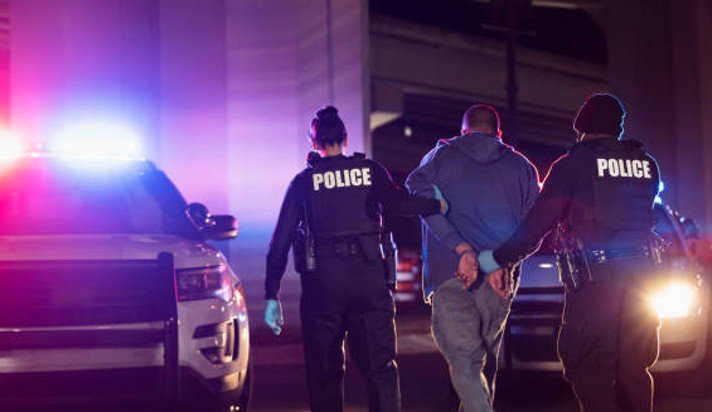
Active Shooter Response and the Three-Zone Model
Most fire crews train on a two-zone scene: inside the hazard zone and outside it. However, active shooter response uses a three-zone model that adds a layer in between. The cold zone is where the command sets up and incoming resources wait for assignment. The warm zone is where Rescue Task Force, or RTF, teams move and treat the wounded. The hot zone is where law enforcement engages the active threat.
Each zone has its own access rules and its own tracking needs. Law enforcement in the hot zone works under its own command. RTF teams pair law enforcement with EMS and cross zone lines as the scene changes. Because of that movement, one entry control point at the building edge cannot track all of them. For that reason, accountability has to follow the zones, not just the front door.
Tracking RTF Teams in the Warm Zone
RTF tracking starts at the warm zone entry point, not the outer edge of the scene. Each RTF team needs its own passport collector that names the team as a unit, with tags for every member. When the team goes into the warm zone, the entry control officer takes the collector and logs the team in. When the team comes out, the collector follows, and the record closes.
That method keeps the board current even when the scene stays fluid. It also gives the safety officer a way to track RTF teams apart from the law enforcement group inside the hot zone. Without that split, the board shows a mixed picture that is hard to read when choices need to happen fast.
What a Working Accountability Setup Looks Like
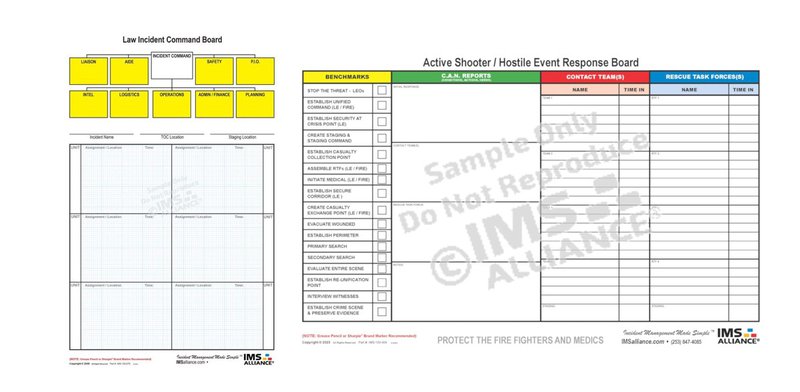
A well-run active shooter response uses the same core tools as any other working incident, set up to match the zone structure. The passport system handles entry and exit at each zone boundary, while the command board tracks sector work and resource status at the command post. IC vests make every command role visible at a glance to any arriving crew.
Together, those tools give the safety officer and the IC a shared picture of the whole scene without relying on radio checks. When a crew from another agency shows up mid-incident, they can read the setup and slot in without stopping the operation for a briefing. Similarly, pre-staged make-up kits give arriving mutual aid crews the passport parts they need to join the system from the moment they step on scene.
Unified Command and Role ID
Active shooter response almost always runs under unified command. That setup puts fire, EMS, and law enforcement under a shared structure while each agency keeps its own chain. It works well for resource calls and tactical planning. However, it creates problems when agencies arrive without knowing each other and have no shared way to read command roles at the post.
IC vests address that problem by giving every command role a clear visual ID that any crew can read from a distance. When any arriving crew can look at the post and read every role at a glance, setup is faster and needs fewer radio calls. For departments that run active shooter drills with other agencies, testing those tools in practice is the best way to find gaps before a real event. Departments ready to set up or upgrade their active shooter accountability tools can reach out to our team to learn more about passport systems, IC vests, make-up kits, and command boards.


