


Consider a hypothetical: a mutual aid crew pulls up to a working fire, but no one has told them who is in charge or where to check in. That kind of gap points to a real breakdown in how an Incident Command System (ICS) plays out in the field. The ICS exists so that any crew from any agency can arrive and plug into the command structure without a separate briefing.
What the Incident Command System Is
The Incident Command System, or ICS, is a standard way to run an emergency scene. It gives each person a defined role, a chain of command, and a clear set of tasks. It also gives the IC a way to manage crews, resources, and operations all at once. Because ICS uses shared terms and a set structure, agencies from different places can work side by side without confusion.
ICS came out of the fire service in the 1970s. Wildfires in California showed what poor command and weak communication could cost. The work that followed built a system that fire departments, EMS agencies, law enforcement, and emergency managers still use today. It is also the core of NIMS, the National Incident Management System, the federal framework for joint response. For departments that get FEMA grant funding, NIMS compliance is a condition of the award, which means ICS must be in active use, not just on paper.
The Command Structure
ICS puts one person in charge of the whole scene. The incident commander, or IC, holds full authority, and every other role reports through a clear chain. That chain prevents freelancing and keeps the IC informed as conditions shift.
Below the IC, the general staff covers four areas: operations, planning, logistics, and finance. Each area has a section chief. Below them, the structure can grow into branches, divisions, groups, and units as the call grows. However, not every call needs all of these slots. A single-company response may run with just an IC and a crew, while a large multi-agency call fills every position. Because ICS scales up and down, the same framework fits both.
Key Roles on the Fireground
Several roles carry the most weight at a working fire. The IC sets the strategy and holds the final call on the scene. The safety officer watches for hazards and tracks personnel accountability across the incident. The operations section chief runs all the tactical work, including every crew inside the structure.
The entry control officer, or ECO, manages accountability at the hazard zone boundary. The ECO takes a passport tag from each responder who enters and keeps the accountability board current. When the IC calls for a Personnel Accountability Report, or PAR, the ECO and safety officer can give an accurate count without waiting for radio checks. After a MAYDAY call or a structural failure, that count needs to happen fast and without error.
How an Incident Command System Supports Personnel Accountability
ICS does more than sort out who does what. It also creates the structure that makes accountability work. When every responder has a defined role, a known assignment, and a supervisor, the IC always has a way to locate anyone on the scene. Without that structure, a PAR is a best guess rather than a real count.
The Passport Accountability System® fits directly inside the ICS framework. Passport tags name each responder by department and assignment. Passport collectors group crews and apparatus so the accountability board reflects the ICS setup, not a flat list of names. When conditions get bad, the command post has a physical record of who is still inside the zone. That record needs no radio, no power, and no network, which is why it holds up when digital tools fail.
ICS in Multi-Agency Operations
ICS works best when every agency on scene uses it the same way. That is the whole point of NIMS: a crew from another county should arrive, find the IC, and join the accountability system without a long briefing. However, mutual aid gaps still show up in practice.
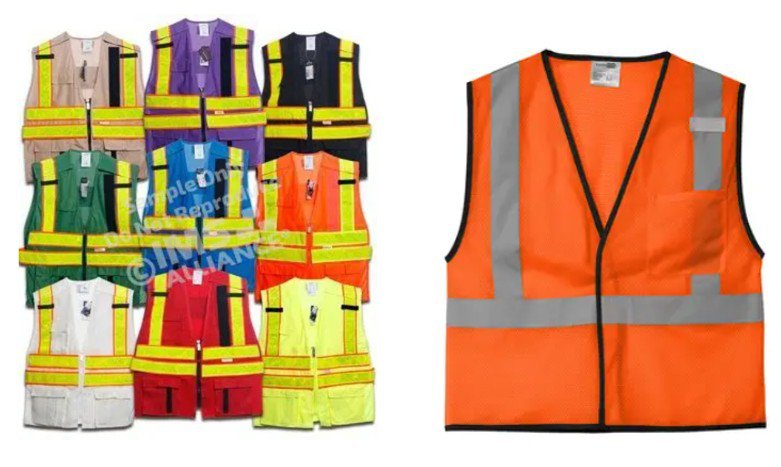
When arriving, crews carry no passport® tags; accountability has a hole from the start. When no one wears a role ID, the IC cannot read the command setup at a glance. IC vests give every command role a clear visual ID. Make-up kits give arriving crews the passport® parts they need to join the host system from the moment they step on scene. Together, those tools cover the two most common ICS gaps in a mutual aid response. Departments that want to build out or upgrade their ICS setup can connect with us to learn more about accountability systems, command vests, and command boards.


