


Departments that only train when a review is close tend to have the same gaps every time. A planned drill calendar spreads training across the year and builds habits that hold up on real calls. Without one, drills get skipped when calls are heavy and crammed in when a grant deadline is near. That pattern does not build the repeat practice that makes crew tracking and command steps work without thinking.
A drill calendar also does something a one-off training event cannot. It builds a dated record over the course of a year. A department that runs its calendar consistently can show an ISO reviewer, a grant committee, or a legal team exactly what it trained, when it ran each drill, and who attended. Chiefs who put the calendar in place early in the year give themselves the best chance of having that record ready when someone asks for it. Departments that only train when a review is close tend to have the same gaps every time. A planned drill calendar spreads training across the year and builds habits that hold up on real calls. Without one, drills get skipped when calls are heavy and crammed in when a grant deadline is near. That pattern does not build the repeat practice that makes crew tracking and command steps work without thinking.
Why the Drill Calendar Matters
A drill calendar gives company officers a clear plan for training time. It also tracks what each crew has covered over the course of the year. Without that structure, training tends to cluster around compliance events rather than real needs. Departments that log drills well also make a stronger case for grant funding. The Assistance to Firefighters Grant, or AFG, program looks for proof of regular, documented gear use and ongoing crew training. For that reason, a clean drill log helps the grant case as much as the training case.
What a Good Drill Calendar Covers
A full drill calendar covers four areas: fireground work, mutual aid and crew tracking, mass casualty incident (MCI) response, and command and records. Each area needs at least one drill per year. High-risk or common scenarios may need more time on the calendar.
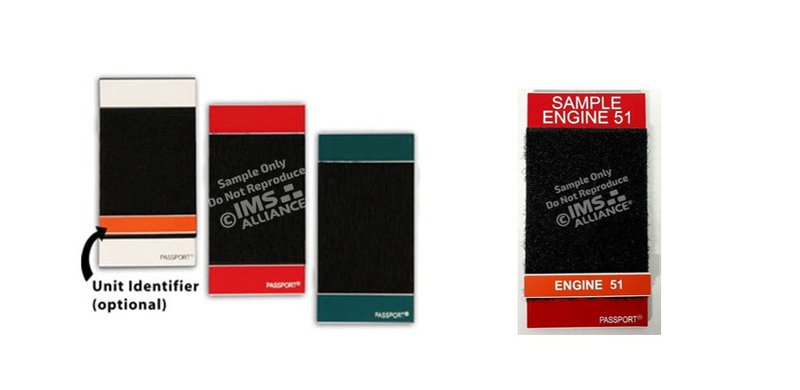
Some departments skip tracking drills because they assume crews know the steps. However, that breaks down when new people join or when a department gets new gear. A dedicated tracking drill tests whether the entry control officer can set up the board fast. It also checks whether passport collectors have the right labels and whether the board shows who is inside the zone at any given moment.
Using Tracking and Command Tools on Every Drill
The best way to build strong habits is to use the full system on every drill. When the entry control officer takes passport tags at the start of a live fire drill, that step becomes routine. When the incident commander uses the command board to log sector work during a drill, the board becomes a trusted tool. That is very different from a board that only comes out when an inspector shows up.
IC vests also belong in every drill rotation. When crews train with vests on, mutual aid units at a real event can read the command setup at a glance. Similarly, helmet shields worn during drills make role ID a habit rather than a last-minute step. Together, those tools practiced on every drill close the gap between training and real-event performance.
Logging Drills for ISO and Liability
Insurance Services Office, or ISO, class reviews check training records along with gear and staffing. Departments that log drills well, with sign-in sheets, scenario notes, and brief after-action observations, build a stronger ISO record than those that drill often but log nothing. For that reason, logging is not extra admin work. It is part of how the drill counts.
Liability exposure after a line-of-duty death often turns on whether the department followed its own training and crew tracking steps. A drill calendar showing regular, documented practice of those steps is one of the clearest records available. Departments that use a command board on every drill also create a dated log of which sectors were active and which crews were inside the zone.
Building a Calendar That Works Year-Round
A simple setup works best. A quarterly plan gives departments a workable frame. One theme per quarter, covering fireground work, mutual aid and crew tracking, MCI response, and command and records, builds a complete training cycle over twelve months. As one quarter closes, the next builds on what came before. By year end, the log shows a full cycle across all major scenario types.
IMS Alliance offers resources to support that cycle, including quick-reference guides, supervisor cheat sheets, and the in-person Tactical Accountability Clinic. Departments ready to build or improve their drill calendar can get in touch with us to learn more about training resources and accountability systems.


