

Locker name tags might look like a small detail, but they quietly set the tone for how a fire station runs. When every locker, cubby, and gear rack carries a clear name, crews spend less time searching and more time getting ready. That same sense of order carries straight into how a department handles accountability on scene.
Good station organization rarely happens by accident. It grows from simple, consistent habits that everyone on every shift can follow. Here's a closer look at how name plates and labels help build a cleaner, safer, and better-run firehouse.
Why Fire Station Organization Starts at the Locker
A fire station works like a shared home and a workplace at the same time. Several shifts may use the same lockers, gear racks, and storage rooms within a single week. Without clear labels, gear gets borrowed, misplaced, or left in the wrong spot. Locker name tags give each firefighter a defined space that truly belongs to them.

That clarity matters most during the first minutes of a call. A firefighter who knows exactly where their gear lives can dress and reach the apparatus faster. Officers also gain a quick visual check of who works out of the station. Small systems like this build trust across shifts, especially in departments with rotating crews or volunteer members.
Clear labels help with day-to-day station equipment, too. Spare gloves, flashlights, and personal items all find a home when every space has an owner. Fewer lost items means fewer replacement purchases and fewer frustrating searches before a shift change.
How Locker Name Tags Support Clean Gear Zones
Fire service health guidance now puts real attention on where turnout gear is stored. The International Association of Fire Fighters calls a hot, warm, and cold zone station layout the gold standard for limiting exposures. Under that model, contaminated gear stays well away from kitchens, bunk rooms, and offices.
Clear labeling helps those zones work in real life. Locker name tags in the gear storage area show which set belongs to whom, so crews handle less gear that isn't theirs. Labeled racks and bins can also show what is waiting for cleaning and what is ready for service. When everyone can read the system at a glance, healthy habits become much easier to keep.
This approach also supports departments that issue two sets of turnouts. Matching labels on each locker and rack help firefighters grab the right clean set every time. It's a simple step that protects people and shared living spaces.
What Makes a Name Plate Built for Station Life
Station life is tough on anything mounted to a wall or locker door. Name plates face daily bumps, cleaning products, humidity, and years of use. A few features separate a lasting label from one that peels or fades within a season:
- Engraved lettering: Engraved text holds up far better than printed stickers or handwritten tape.
- High-contrast colors: Light text on a dark background, or the reverse, stays readable in dim locker rooms.
- Consistent formatting: Matching last names, first initials, and ID numbers keep every locker uniform.
- Easy replacement: Tags that swap out quickly make staffing changes simple to manage.
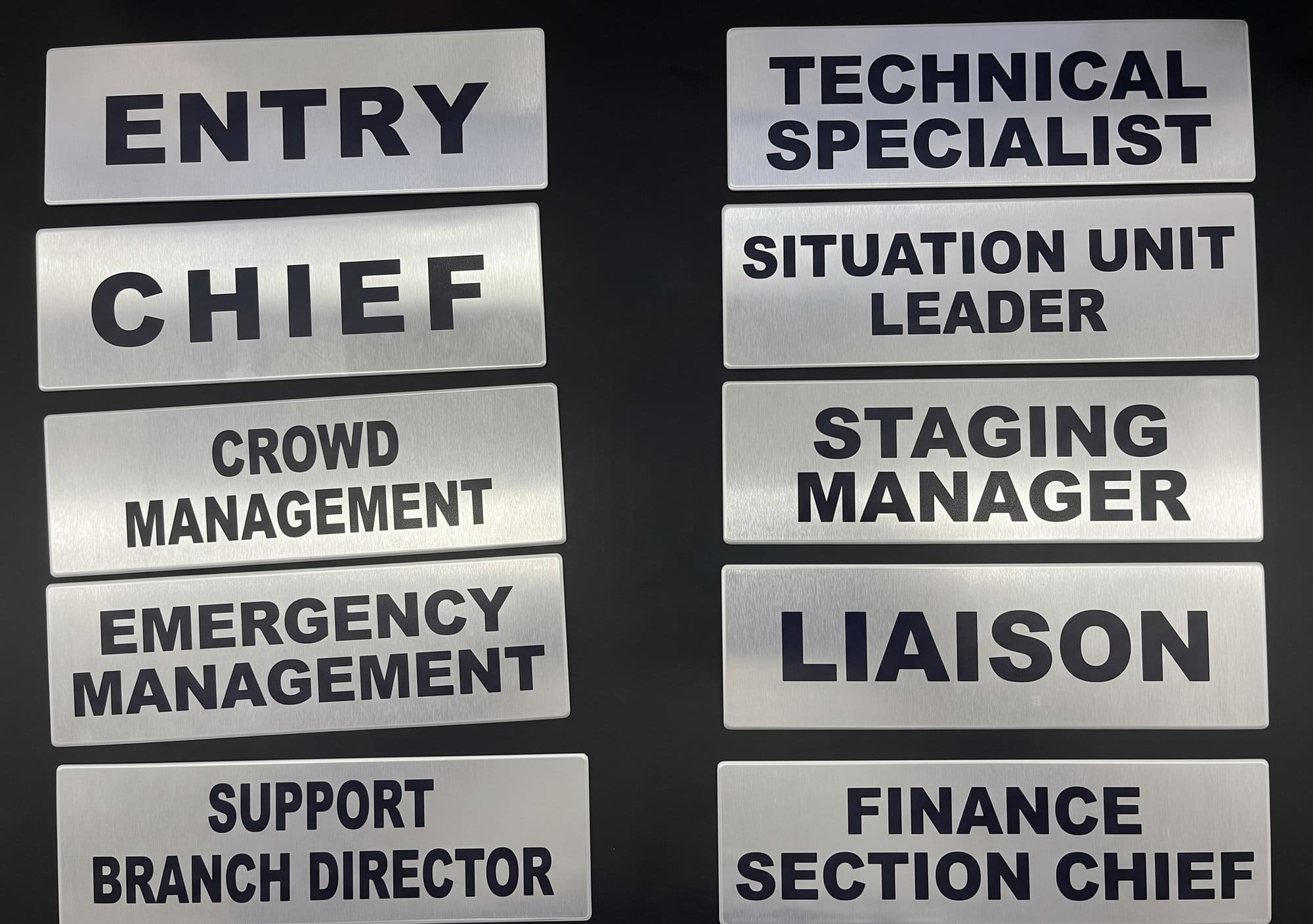
Departments that already use engraved Passport® name tags can apply that same format to locker name tags. One naming style across the station keeps things tidy and familiar. It also reduces confusion when new members join the roster.
Mounting Options for Locker Name Tags
How you mount a tag matters as much as what it says. Metal lockers, wooden cubbies, and painted walls each call for a slightly different approach. A sturdy holder keeps locker name tags straight, secure, and easy to update.
One practical option is a metal locker tag holder with a bright silver finish and two pre-drilled screw holes. These holders come in several sizes, from 1 x 4 to 2 x 8. Mounting choices include screws, double-sided tape, or hook-and-loop fasteners. That flexibility lets a department label lockers today and move tags around as assignments change.
Before ordering, take a quick walk through the station. Count lockers, note surface types, and decide on one standard size. A little planning up front keeps the finished look consistent.

Linking Station Labels to Fireground Accountability
The habits a crew builds in the station often follow them onto the fireground. Many departments already track personnel at incidents with name tags and collectors. The Passport Accountability System® gives command staff a clear view of crews and assignments at a glance.
When locker name tags follow the same naming format as accountability tags, firefighters see one consistent identity everywhere. That repetition builds familiarity, which helps during high-stress moments. A well-organized station becomes a quiet form of daily training.
Officers benefit from this consistency as well. A name that reads the same on a locker, a helmet tag, and a command board leaves less room for error. Clear identification supports faster decisions when every second counts.
Small Details That Shape a Stronger Station
Strong departments tend to treat small details as part of their safety culture. Locker name tags, labeled racks, and clear storage zones all send the same message. Everyone has a place, and every piece of gear matters. Start with a simple labeling standard, then build on it as your station grows.
For departments that want their station and their scene to speak the same language, IMS Alliance® has been a trusted partner since 2006. As the trademark holder of the Passport Accountability System®, this veteran-owned and operated company builds mission-driven incident management tools for the people who answer the call. Its catalog ranges from command boards and vests to custom name tags and locker hardware.
If your crew is ready to bring more order to the locker room, we'd love to hear what your station needs. Reach out to the IMS Alliance® team and let's talk through a setup that fits your department.


