

Mutual aid between ARFF crews and municipal fire departments turns two separate organizations into one response force. Airport crews bring specialized apparatus and aviation knowledge. City and county departments add staffing, water supply, and structural firefighting depth.
When these teams know each other before the call, the response feels coordinated instead of improvised. Getting there takes more than a signed agreement, though. Here is how strong airport and municipal partnerships make it work on the ground.
Why Mutual Aid at an Airport Looks Different
An airport is not a typical response district. Municipal crews on the airfield face runways, taxiways, active aircraft, and strict security rules. Most structural engines also carry less foam and lack the off-road capability that ARFF vehicles bring to a crash site. Fuel spills, jet blast, and moving aircraft add hazards that few structural firefighters see on a regular shift. Mutual aid on airport property works best when every arriving company respects these differences from the first minute.
The support also flows in both directions. ARFF units sometimes respond off airport property to aircraft accidents in nearby communities. That places them on unfamiliar streets and inside unfamiliar command structures. Both sides benefit when they understand each other's capabilities, limits, and habits long before a real emergency.

Building Agreements Before the Alarm Sounds
Strong partnerships begin with a written agreement that spells out who sends what, when, and under whose authority. FEMA's NIMS Guideline for Mutual Aid explains that these agreements set terms for sharing personnel, equipment, facilities, and supplies. For certificated airports, the mutual aid agreement should connect directly to the airport emergency plan required under FAA Part 139.
Good agreements answer practical questions. Which gate will outside apparatus use? Who escorts them across the movement area? Which radio channel connects incoming crews to the incident commander? Settling these details ahead of time keeps responders focused on the incident instead of on logistics.
Agreements should also address cost recovery, liability, and workers' compensation for responders working outside their home jurisdiction. Reviewing these terms every year keeps them current as staffing, apparatus, and airport layouts change.
Unified Command on the Airport Operations Area
Most aircraft emergencies quickly draw multiple agencies, including airport operations, law enforcement, EMS, and neighboring fire departments. The Incident Command System gives them a common structure. Unified command then lets agency leaders share decisions without giving up their own authority. ARFF officers often hold early command because they know the airfield, the aircraft, and the hazards involved.
As municipal chiefs arrive, the command team should form at a clearly marked command post. An ITAC Command Post Status Board helps commanders track assignments, resources, and objectives in one view. That common picture keeps mutual aid companies working inside the plan rather than freelancing on the ramp.
Communications deserve the same attention. Many airport and municipal departments operate on different radio systems, so the agreement should name a shared interoperable channel. A designated communications unit leader can keep radio traffic organized as more units arrive.
Clear Roles and Fast Identification
Responders from different agencies often wear different gear, use different titles, and follow different routines. On a busy ramp, that variety can slow down even simple decisions. Departments can reduce confusion with a few consistent practices:
- Assign staging locations that keep outside apparatus off active taxiways until command calls them forward.
- Designate an airport liaison who briefs incoming officers on hazards and access routes.
- Use plain-language terms instead of agency-specific codes on shared radio channels.
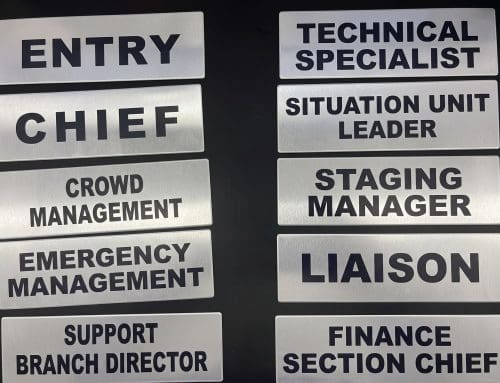
- Make command and safety roles visible to everyone on scene.
These steps sound simple, yet they prevent many of the delays that slow multi-agency mutual aid incidents. Visibility matters most for key positions. An incident command vest lets any firefighter spot the safety officer or a division supervisor at a glance.

Accountability That Holds Across Every Mutual Aid Crew
Personnel accountability becomes harder when several departments work the same incident. Each agency may track crews its own way. A missing firefighter is far harder to find when no one knows who arrived. A shared accountability method gives the incident commander one reliable count, no matter which patch a responder wears. That count becomes critical during an emergency evacuation or a sudden change in fire conditions.
The Passport Accountability System® supports this by tying personnel name tags to each company and its assignment. When a crew enters a work area, its Passport® goes to the accountability officer. That officer places it on the board alongside every other unit on scene. Officers can then confirm who is working, where they are, and which crews need relief. Airport and municipal partners that adopt compatible methods close one of the biggest gaps in joint operations.
Training Together So the Plan Holds Up
Agreements and equipment only work when crews practice with them. Joint drills, tabletop sessions, and full-scale exercises let ARFF and municipal firefighters learn each other's apparatus and command styles. After-action reviews from those exercises reveal which parts of the mutual aid plan need adjustment. Small fixes made in training can save critical minutes during a real aircraft emergency.
Rotating drill locations between the airfield and the surrounding community also helps. Municipal crews learn the airport layout, and ARFF personnel grow comfortable with off-airport command structures. Each session builds familiarity that carries straight into the next real call.
Since 2006, IMS Alliance® has equipped fire departments, airports, and emergency agencies with practical tools for command and accountability. As a veteran-owned and veteran-operated company, we hold the trademark on the Passport Accountability System®. Every board, vest, and tag we build serves one mission: bringing every responder home safely. Planning your next joint airport exercise? Send us a message today. Our team would love to hear about your setup and help you find the right fit.