


Passport accountability only works if it survives the moment command changes hands. An incident can run for hours, and the person tracking personnel at minute five is rarely the same person tracking them at minute ninety. When that handoff happens, the accountability picture has to move with it, complete and current, or the crew on scene loses the one thing that keeps them safe: someone who knows exactly who is where.
Why Command Transitions Can Put Passport Accountability at Risk
Command transitions happen for good reasons. A more senior officer arrives and assumes authority. An incident grows in scope and shifts from a single unit to Unified Command. A shift change rolls through mid-incident. Each of these moments is also a point where information can get lost. The outgoing commander knows which crews are inside a structure, which apparatus are staged, and which personnel just rotated to rehab. If that knowledge does not transfer cleanly, the incoming commander is making decisions with a partial picture.
Passport accountability exists to close that gap. Because the system tracks personnel by unit, assignment, and location using physical passport collectors and name tags, the record itself becomes the handoff tool. It does not depend entirely on memory or a verbal summary that might miss a detail under pressure.

The Passport Accountability Handoff, Step by Step
A clean transfer of accountability generally follows a consistent sequence, regardless of the size of the incident.
- The outgoing commander gathers the current accountability status. This means every passport board or incident command board reflects live conditions, not conditions from ten minutes ago. Crews that changed assignment or moved to rehab need their tags moved before the briefing starts.
- A face-to-face briefing covers the accountability picture directly. The incoming commander needs to hear, not just see, where personnel stand. This lines up with FEMA's NIMS guidance on establishment and transfer of command, which notes that command may shift to a different Incident Commander more than once during a long or complex incident, and that each shift needs to be clearly stated and recorded.
- The physical accountability tools transfer along with the verbal briefing. The passport boards, name tags, and any command boards in use move to the new command post location, or the incoming commander moves to where they already are. Nothing about accountability should require rebuilding from scratch.
- The transfer gets announced over the radio. Every unit on scene should hear who has command now. This single step prevents the most common accountability failure of all: two people believing they are still in charge of tracking the same crews.
- The incoming commander confirms the count. A quick verification against the passport boards, matching personnel present to personnel accounted for, closes the loop before operations continue.
Where These Handoffs Tend to Break Down
Several patterns repeatedly cause accountability to slip during command transitions. An outgoing commander gives a verbal briefing but never physically transfers the accountability boards. As a result, the incoming commander relies on memory rather than the actual boards. Crews may also receive new assignments shortly before the transition, while their tags remain unchanged. In other cases, the transition appears seamless on paper, so nobody formally announces it. Personnel accountability then becomes split between two people, each assuming the other has responsibility.
None of these failures require a large incident to matter. A short structure fire with a quick command change can suffer the same gap as a multi-day event with rotating shifts. The size of the incident is not the risk factor. The clarity of the handoff is.
Building Reliable Tools Into the Handoff
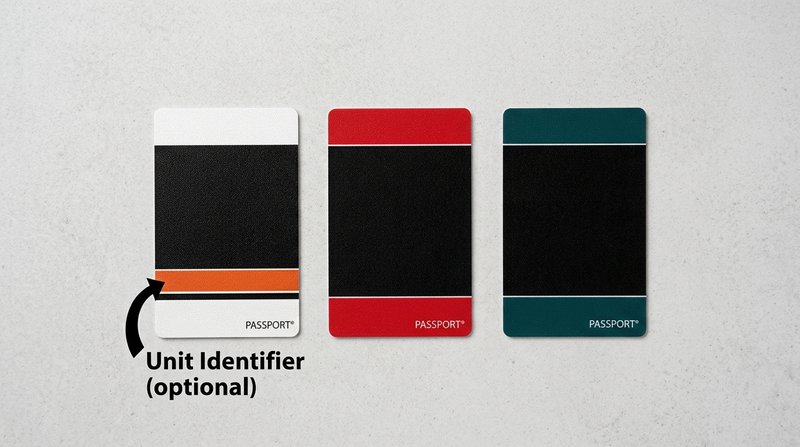
A physical, standardized Passport Accountability System® provides something a whiteboard or mental note cannot: a portable, tamper-resistant record. That record moves with the command function itself. Because passports and name tags are organized by unit and assignment, incoming commanders can quickly review crew locations. They can understand the board within seconds without waiting for a full narrative briefing.
Departments that pair this system with a dedicated command board tend to see fewer gaps during transitions, simply because the accountability data and the tactical picture live in the same physical space. When both move together, the handoff becomes a single action instead of two separate ones that can drift out of sync.
Training for the Passport Accountability Handoff, Not Just the System
Equipment alone does not guarantee a clean transition. Departments that train specifically on command transfer procedures, not just on passport accountability in general, tend to handle these moments with less friction. Regular drills that include a deliberate change of command help crews build the habit of verifying accountability at the exact moment authority shifts, rather than assuming it will sort itself out.
IMS Alliance is the trademark holder of the Passport Accountability System®, a veteran-owned and operated company building mission-driven tools for incident management. Departments across the country rely on the system to keep personnel accountability accurate from first arrival through final command transfer.
If your department is reviewing how accountability moves through command transitions, reach out to the IMS Alliance team. We can walk through what a passport accountability setup looks like for your size of operation and help make sure nothing gets lost in the handoff.


